Bernie Sanders Seeks a 5% Yearly Tax on 938 Billionaires
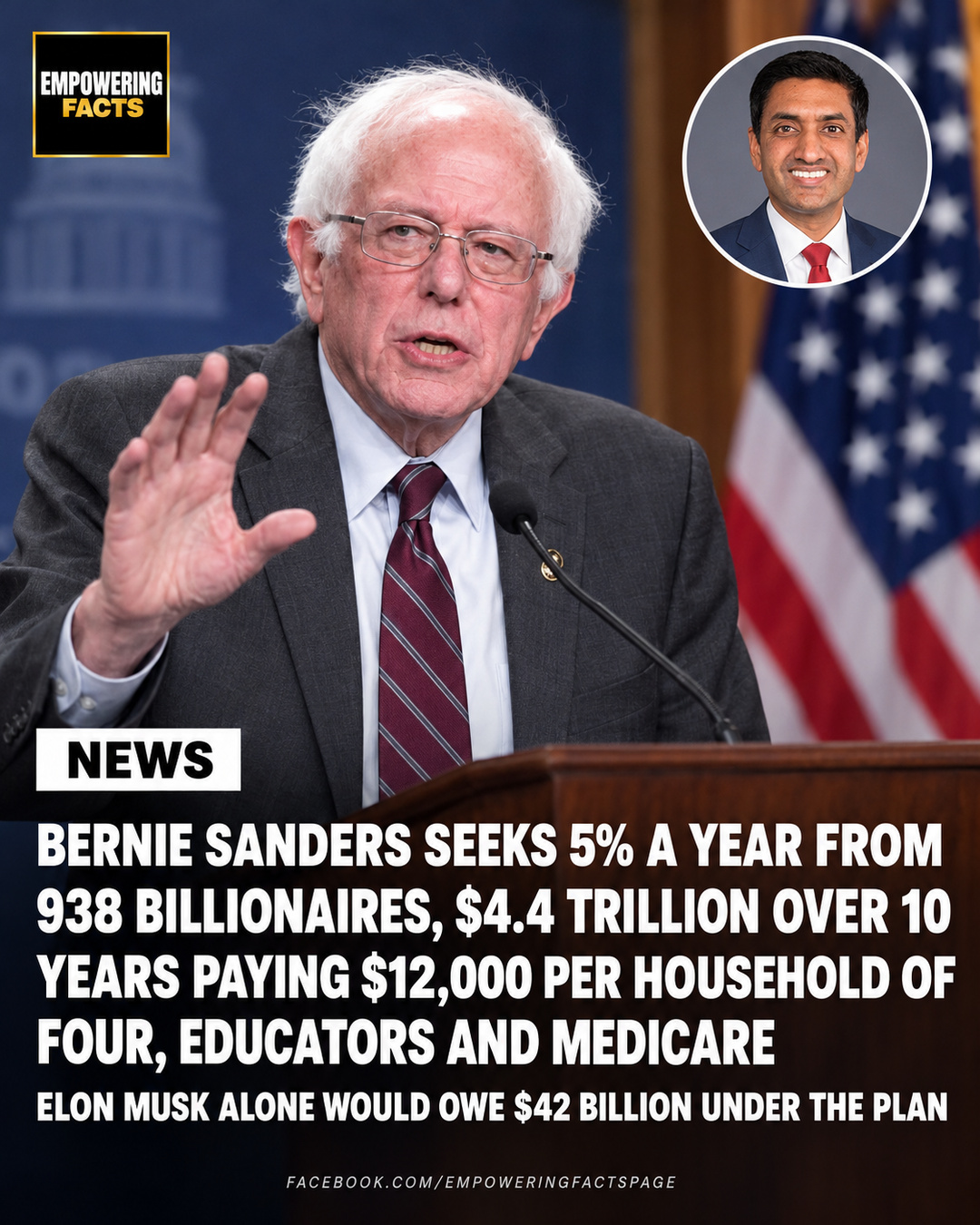
Bernie Sanders wants a 5% tax every year on the wealth of America's 938 billionaires.
The Vermont senator introduced the plan in March with Rep. Ro Khanna, a Democrat from California. It is called the Make Billionaires Pay Their Fair Share Act. The tax would apply only to assets above $1 billion, so the first billion of anyone's fortune would not be taxed at all. Only 938 Americans are above that line. The sponsors estimate the tax would raise $4.4 trillion over 10 years.
Part of the money would go directly to families. Individuals in households earning $150,000 or less would receive a one-time payment of $3,000 each. For a family of four, that adds up to as much as $12,000.
The rest is set aside for a long list of programs. That includes a more than $1 trillion expansion of Medicare and Medicaid, money to build affordable homes, caps on what families pay for childcare and a $60,000 minimum salary for public school teachers.
The bill also lists what some of the richest Americans would owe in a single year. Elon Musk alone would owe about $42 billion. Jeff Bezos and Mark Zuckerberg would each owe roughly $11 billion. Those amounts would be due every year, not once, for as long as the fortunes stayed above $1 billion.
Sanders made the case in plain terms: "We can no longer tolerate a corrupt tax code that enables billionaires to pay a lower tax rate than the average worker." Khanna described the plan as asking billionaires to pay "a modest amount" while keeping the country's innovation engine running.
Critics do not accept the numbers. Jared Walczak, a senior fellow at the Tax Foundation, said that to believe the estimate, you would have to believe a 5% annual tax on investments and closely held businesses would have no economic effect worth mentioning. Opponents also note that most billionaire wealth is tied up in company stock rather than cash, which means owners might have to sell shares every year to pay. Several European countries once had wealth taxes and later dropped them, citing low revenue and wealthy residents moving away.
Supporters answer that ordinary workers pay tax on their paychecks every year, while large fortunes can grow for decades without being taxed until the assets are sold, and sometimes not even then. They argue a yearly tax on the very top would close that gap.
This is not the first time the idea has come up. Sanders and Sen. Elizabeth Warren both campaigned on wealth taxes during the 2020 presidential race, and neither plan passed.
The new bill faces the same hurdle. It would need to pass both the House and the Senate, and Republicans control both chambers. For now, it stands as a statement of what Sanders and Khanna want the debate to be about ahead of the midterm elections.
Do you support a 5% yearly tax on billionaires? YES OR NO?