Florida Becomes First State to Block Welfare Cash for Vapes, Tattoos and Theme Parks
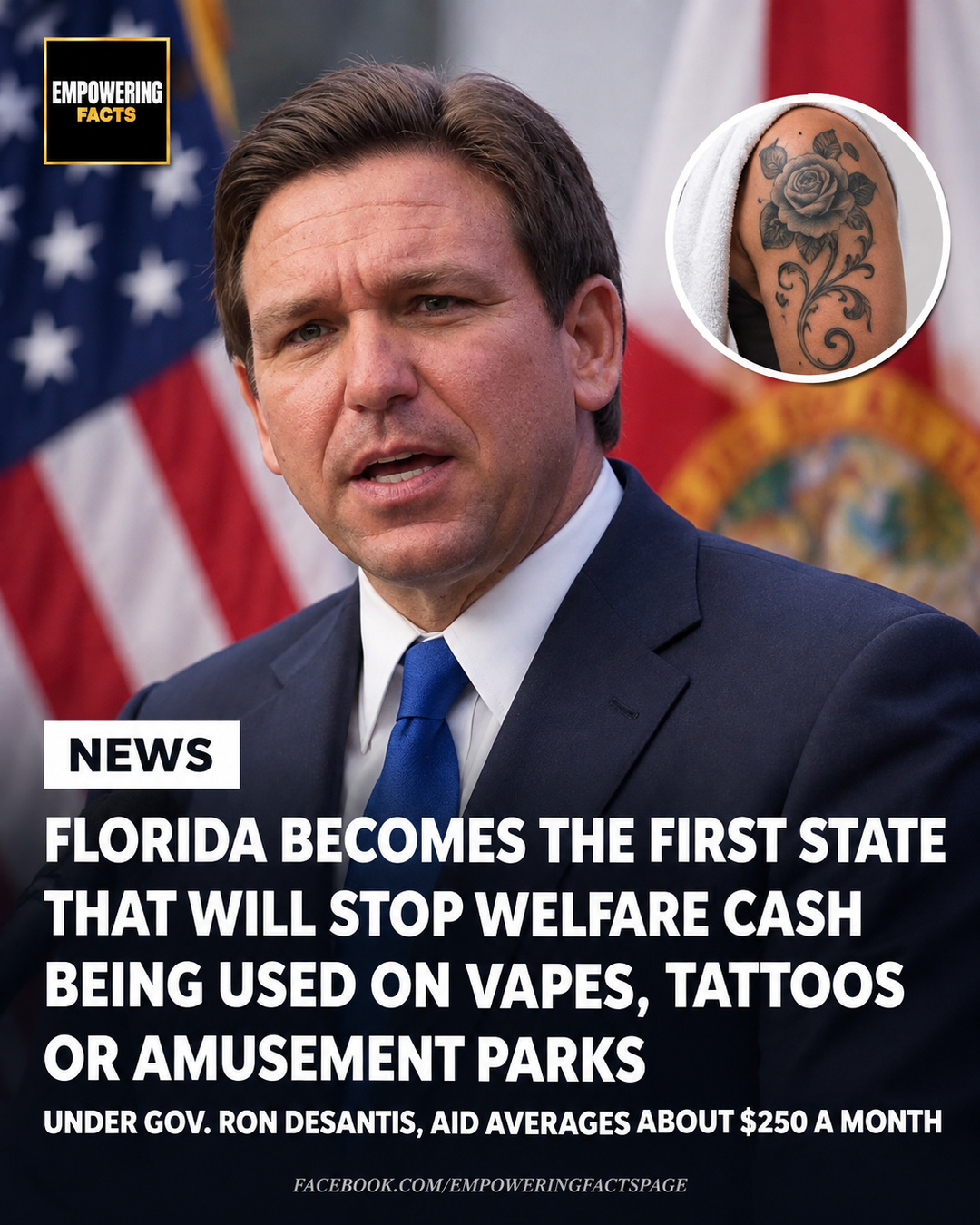
Florida has become the first state to put item-level limits on what welfare cash can buy.
Under Governor Ron DeSantis, the state has changed the rules for its Temporary Cash Assistance program. The program is funded through the federal TANF program, short for Temporary Assistance for Needy Families, and is run in Florida by the Department of Children and Families. Families on the program receive their money on an EBT card, which works much like a debit card at stores and ATMs.
Under the new rules, that cash can no longer be spent on tobacco, nicotine or vaping products. It also can't be used for tattoos, spa services or tanning, video games, entertainment tickets, theme park admission, streaming and entertainment subscriptions, pornography, drugs and intoxicants, or psychic and fortune-telling services.
The goal, according to the state, is to keep the money on basic needs like food, rent, utilities, clothing and diapers.
Here is the new detail many people missed. The benefit is not large. Florida's cash assistance averages about $250 a month per family. That is the money these rules are protecting, and the state's position is that every dollar of it should go to the household's necessities. For a family trying to cover rent and groceries on that amount, the state argues, a tattoo or a theme park ticket is not a basic need.
It is also worth separating this program from food stamps. SNAP, the federal food program, already limits what can be bought to groceries. Temporary Cash Assistance is different because it has always been cash, which is why the question of how it gets spent has been harder to control.
Federal law already blocked welfare cash from being used at liquor stores, casinos and adult entertainment businesses. Florida's change goes further by targeting specific items and services instead of only certain locations. That is what makes it the first of its kind in the country.
The Trump administration is now urging other states to follow Florida's lead and set similar limits on non-essential purchases. If other states move, Florida's list could become the model for a national standard.
Supporters call it common sense for taxpayer money and a way to protect public trust in the program. They point out that the rules leave every basic need untouched. Critics say it adds new rules for families already stretched thin, and that enforcement at the register could be difficult, since cash withdrawn from an ATM is hard to track once it leaves the machine.
The real test will be how the limits work in practice over the next several months. Florida will be watched closely, both by states that want to copy the rules and by groups that want to challenge them.
The restricted list runs from nicotine to fortune-telling, while everyday needs such as groceries, rent, utilities, clothing and household supplies remain allowed. The changes were announced in late August 2026 and drew national attention within days.
Should every state adopt Florida's welfare spending limits? YES OR NO?