Gillibrand's HUMBLE Presidents Act Would Ban a Sitting President's Name on Federal Property and Currency
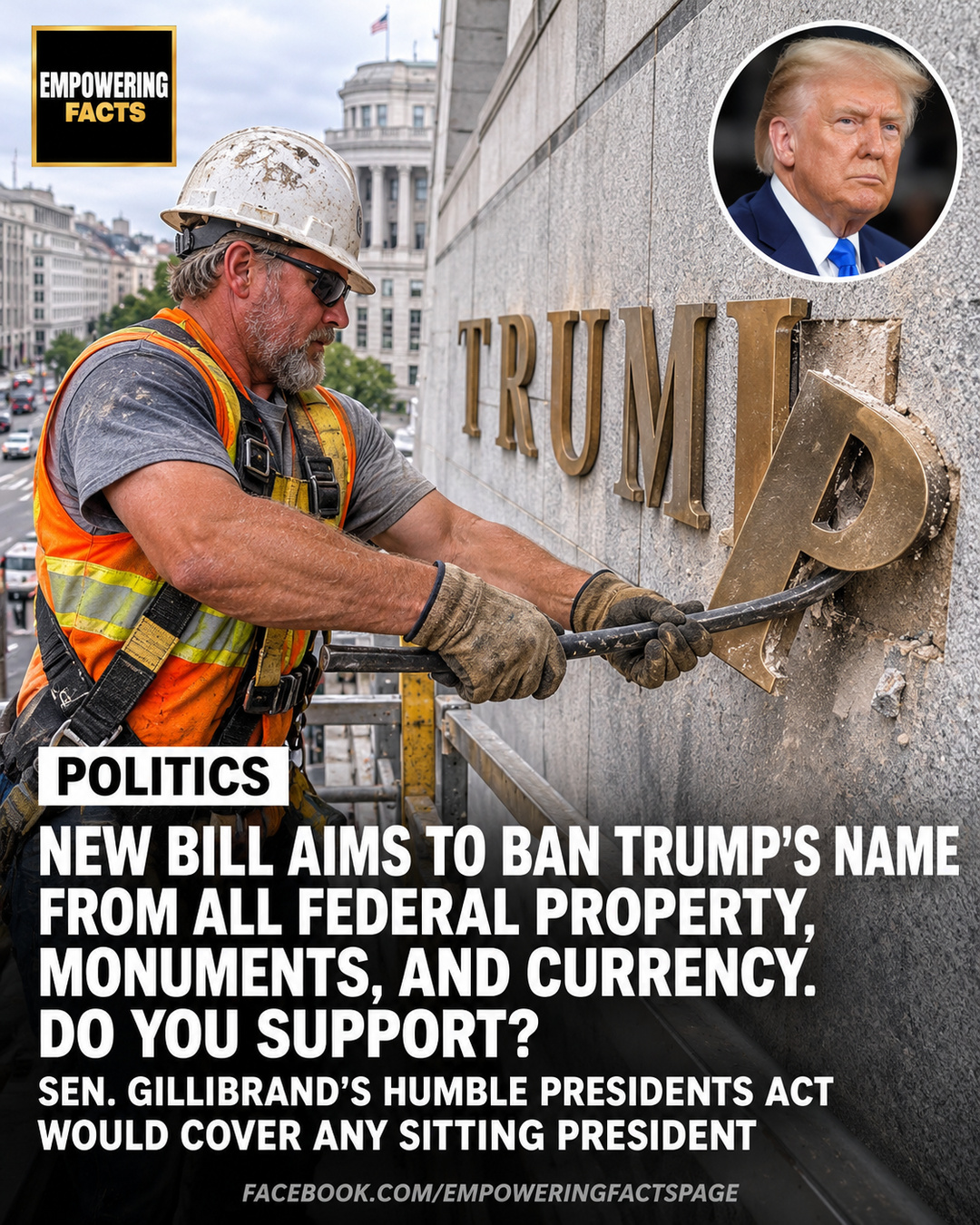
A new bill in the Senate aims to ban President Trump's name from federal property, monuments and currency. It is the most sweeping attempt yet to stop a sitting president from putting his own name on things the public owns.
Sen. Kirsten Gillibrand of New York introduced the HUMBLE Presidents Act on April 16, 2026, after first announcing it in late March during the nationwide No Kings protests. The full name is the Halting Unilateral Money and Building Labeling by Egotistical Presidents Act. It would stop any sitting president from using his or her name, image, likeness or signature to name or decorate federal property, federal assets, coins or paper currency. It would also bar federal funds from being spent on that kind of labeling. The bill text amends the sections of the U.S. Code that govern coin and currency design.
Her office listed examples the bill would block: banners with a sitting president's face hung on federal buildings, a class of Navy warships named after a sitting president, and a sitting president's signature on U.S. paper money. Monuments on federal land count as federal property under the bill.
The bill lands in the middle of several fights over the President's name. The Treasury moved this year to put Trump's signature on new paper currency alongside Treasury Secretary Scott Bessent's, dropping the Treasurer's signature for the first time in about 165 years. Rep. Joe Wilson of South Carolina introduced a bill in February 2025 to create a $250 note with Trump's portrait, which would require changing a federal law that bars living people from appearing on U.S. money. In Washington, a federal court ordered Trump's name removed from the Kennedy Center, and an appeals court declined the administration's request to pause that order.
Supporters of the bill say the issue is bigger than one president. They argue that public buildings, ships and money belong to the country, and that a president in office should not be able to brand them. They point out that the bill does not touch honors given after a president leaves office, which is how presidents have traditionally been recognized.
Critics see it differently. They call the bill a political stunt aimed at one man and say the timing, launched during anti-Trump protests, shows its real purpose. Supporters of the President argue that his name on currency and buildings reflects his record and his popularity with voters.
Because the bill covers every sitting president, it would bind future presidents of both parties, including any Democrat elected in 2028.
The bill has not received a committee vote. To become law it would need to pass the Senate and the House and then be signed by the President whose name it targets, or survive his veto. For now, it stands as a marker in a fight that is playing out on dollar bills, building facades and court dockets at the same time.
Do you support banning a sitting president's name from federal property and money? YES OR NO?