
Greece Is Closing Down over 60 Unlicensed Prayer Rooms in Athens
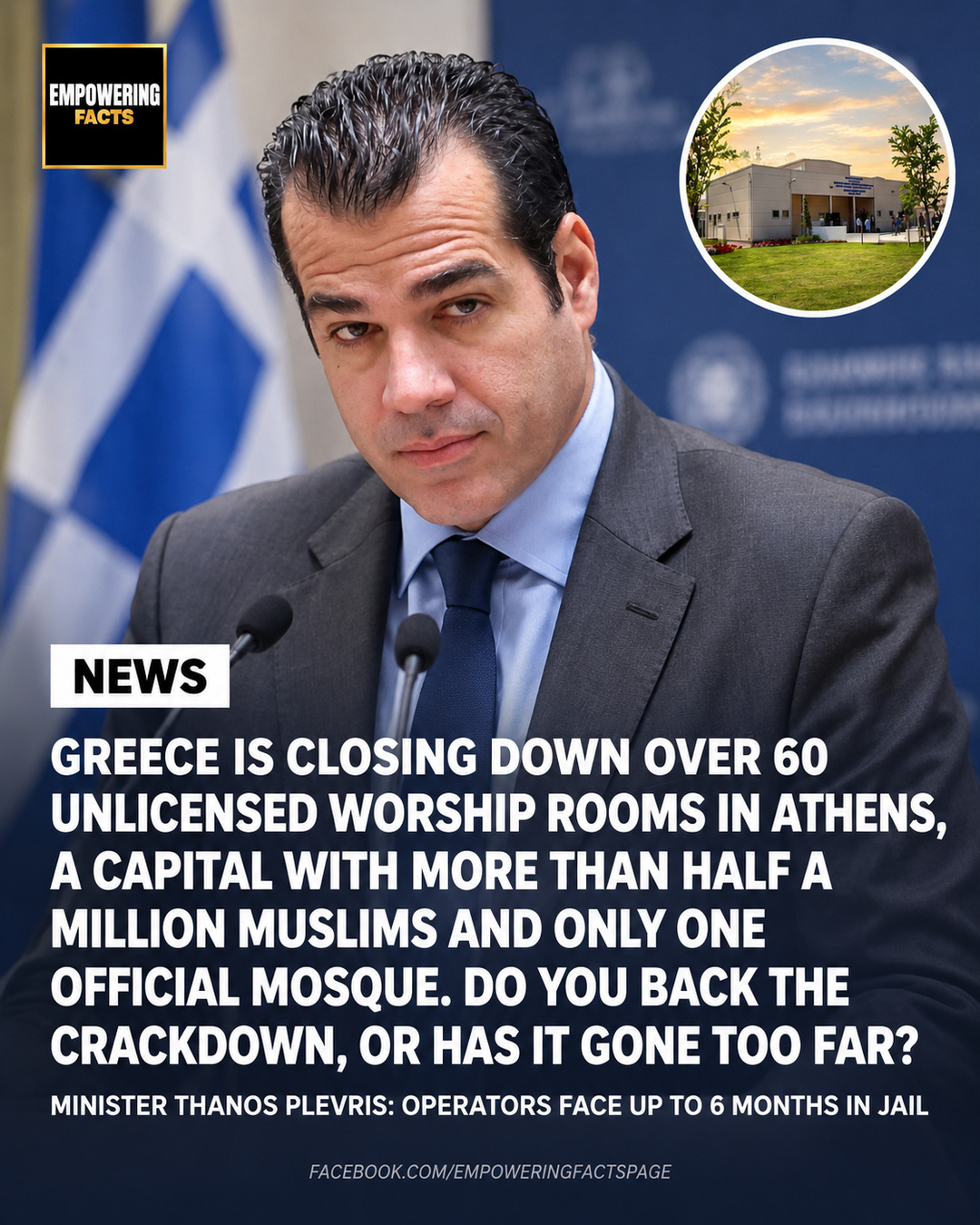
Greece is moving to close more than 60 unlicensed prayer rooms in Athens, and running one is now a crime that can lead to prison and deportation.
The crackdown was announced in February 2026 by Thanos Plevris, Greece's minister of migration and asylum. He presented it as a nationwide sweep against illegal places of worship, with Athens and the wider Attica region as the main focus. Officials say many of the sites operate in basements, apartments, warehouses and parking garages, and that they often lack basic safety features such as ventilation and toilets.
The legal basis is Law 5224/25. Under it, operating an unauthorized religious site is a criminal offense. It carries two to six months in prison and substantial administrative fines. Foreign nationals caught running such a site can have their residence permits revoked and face deportation. That last provision is what makes the policy as much about migration as about building codes.
The numbers behind the story are disputed. Estimates of the Muslim population in Athens range from more than 300,000 to around half a million, many of them migrants from South Asia, the Middle East and North Africa. For decades the Greek capital was described as the only capital in the European Union without an official mosque. Plans for one stalled again and again over funding, politics and local opposition.
That changed in 2020, when a state-built mosque opened on Iera Odos in the Votanikos district. It was the first official mosque in Athens since the 19th century. But it has limited capacity, and older reports counted about 100 informal prayer spaces across the city, only a handful of them licensed. Muslims in Athens have long said that the shortage of legal options is the reason informal prayer rooms exist in the first place.
The government's position is that licensing and safety rules apply to every building and every faith, and that unregistered sites in unsafe spaces put worshippers at risk. Officials also argue that the state cannot allow religious sites to operate without any oversight.
Muslim advocates see it differently. They told Religion News Service that the policy is aimed at flushing out migrants, and that it could leave large numbers of people under threat of deportation for practicing their religion. Critics add that one official mosque cannot serve a community of this size, so closing the informal ones without opening alternatives leaves people nowhere legal to pray.
Greece is not alone. Several European governments have tightened rules on religious sites and foreign funding in recent years, and the debate over how far the state should go is growing across the continent.
So far the government has not announced new licensed mosques or a timeline to approve more sites. Muslim community leaders say the licensing process has been slow and costly for years, which is one reason so many informal prayer rooms opened in the first place.
Do you back the crackdown, or has it gone too far? YES OR NO?