
Should Zohran Mamdani Be Denaturalized and Be Deported?
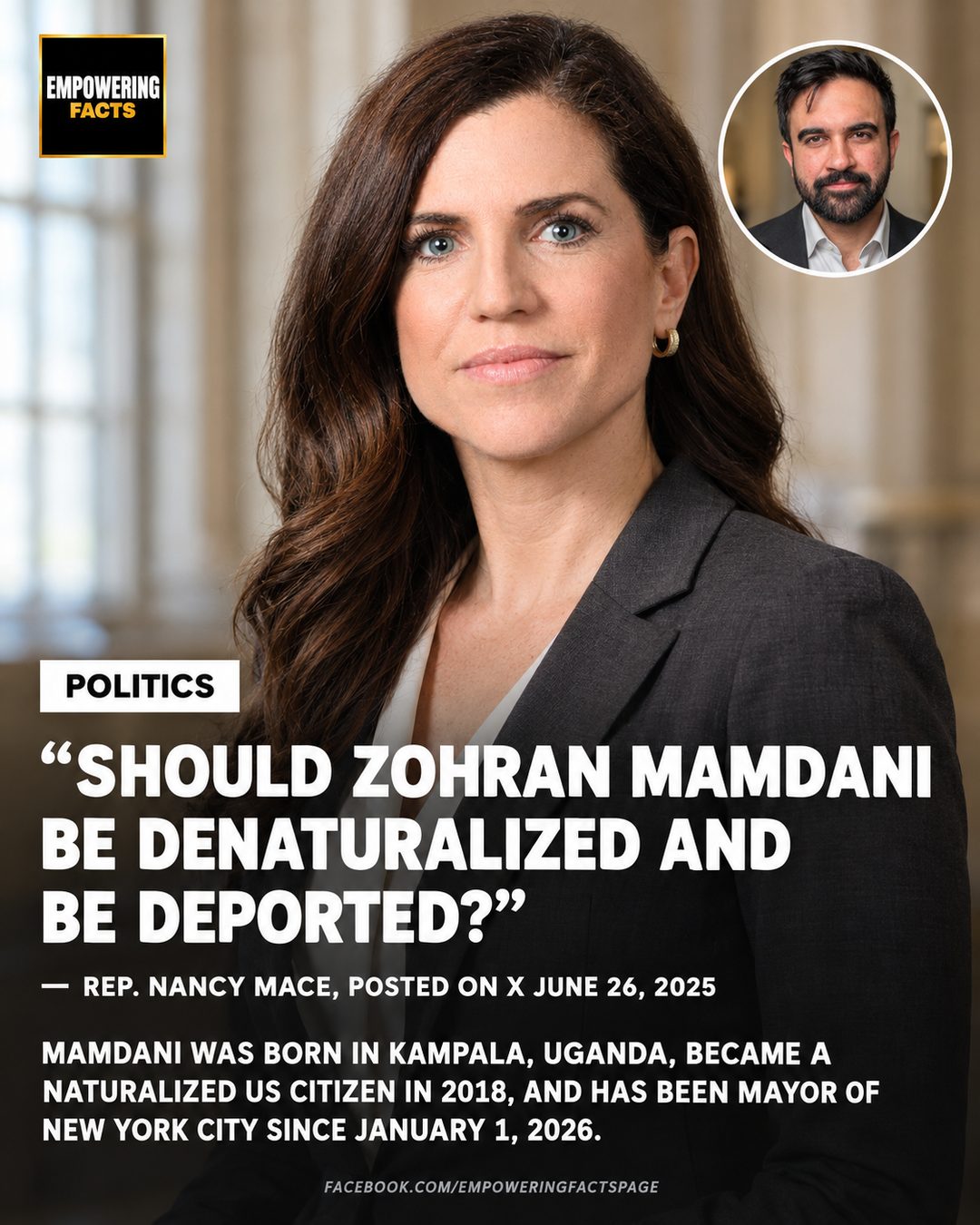
Rep. Nancy Mace of South Carolina put a question to her followers on X on June 26, 2025: "Should Zohran Mamdani be denaturalized and be deported?" It is a short post. Almost everything interesting about it sits in what would have to be true for the answer to be yes.
The post came two days after Mamdani won the Democratic primary for mayor of New York City. He has since taken office, and has been mayor since January 1, 2026, which means the subject of the post now runs the largest city in the country. That timing changes how the post reads now compared with how it read then.
The facts around the question are settled and public. Mamdani was born in Kampala, Uganda, on October 18, 1991. His family moved to the United States when he was seven years old, settling in New York City. He became a naturalized United States citizen in 2018, seven years before the post was written and long before he ran for citywide office.
That citizenship is what the question turns on, and it is worth being precise about the law rather than the politics. United States citizens, whether naturalized or born in the country, cannot be deported. Deportation is a proceeding that applies to non-citizens, and there is no separate category of citizen who is deportable. This is not a technicality or a loophole. It is the operating principle that makes citizenship mean anything at all, and it applies identically to a citizen by birth and to a citizen by naturalization.
Denaturalization is a distinct process, and a deliberately narrow one. The federal government must prove in court that citizenship was obtained by fraud or by the concealment of a material fact at the moment it was granted. The Supreme Court has held that the standard is demanding, precisely because stripping citizenship is close to the most serious thing a government can do to a person short of imprisonment. Historically it has been used against people who lied about war crimes, concealed prior identities, or falsified the record they submitted.
What that means in practice is that denaturalization is not a remedy for speech, for policy positions, or for holding views a large number of people dislike after citizenship already exists. It is an inquiry into the naturalization file itself. If nothing was concealed and nothing was falsified in 2018, the process has nothing to work with, regardless of what the person has said or done since. A citizen who becomes politically objectionable does not thereby become denaturalizable, and that has been true across administrations of both parties.
Mace was not alone in raising it. Several House Republicans made similar calls during and after the primary, most of them citing Mamdani's statements on Israel and past public remarks. Rep. Andy Ogles wrote to the Justice Department asking it to consider proceedings. Others pressed the administration to act under Cold War era immigration provisions written for a different problem in a different century. Mace returned to the theme in a further post on July 22, 2026. None of it has produced a proceeding, and none of it changes the underlying legal position.
The post is reported here as it was written. It is a real statement from a sitting member of Congress rather than a paraphrase, and it is quoted rather than characterized for exactly that reason. What the law allows is a separate matter from what an elected official puts to a follower poll, and both are worth knowing before anyone argues about either.
How many Americans do you think have actually been denaturalized in the past decade? Drop your guess below.