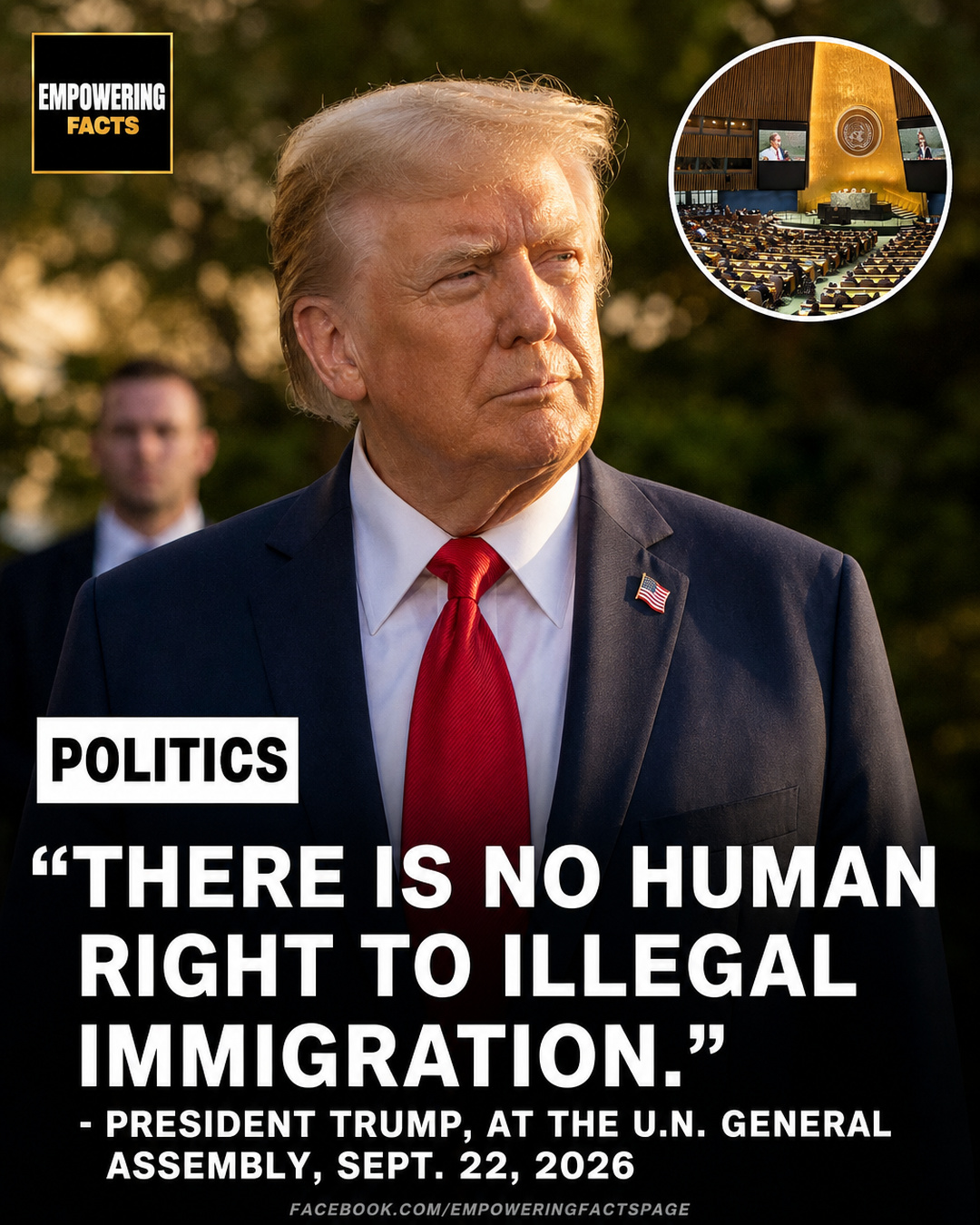
Trump at the U.N.: 'There Is No Human Right to Illegal Immigration'
President Trump brought his immigration message straight to the world's biggest diplomatic stage this week, and he did not soften it for the audience in the room.
Speaking to the 81st United Nations General Assembly in New York on Tuesday, September 22, Trump told world leaders: "There is no human right to illegal immigration, but there is a right to remain a sovereign nation."
The line put immigration and national sovereignty at the center of the address. Trump also used the speech to criticize what he called the excessive influence of international organizations over national governments, a theme he has returned to often since his first address there in 2017. He has long argued that the U.N. asks the United States to pay the bills while other countries set the rules.
He told the assembly the United States now has its "most secure border in history," pointing to tighter enforcement at the southern border and expanded deportation measures under his second term. It was a victory lap delivered in the one room where many of the countries most affected by American immigration policy sit side by side, from Latin American governments to European allies facing their own migration pressures.
The reaction split along familiar lines. Supporters said the President was defending the basic right of every country, not just the United States, to decide who enters it and on what terms. They argued that a nation that cannot control its border cannot protect its workers, its wages or its public services. Human rights organizations and immigration advocates pushed back hard, arguing that international law protects refugees and asylum seekers even while nations keep authority over their own borders.
That debate goes to the heart of how the U.N. itself operates, since several of its agreements deal directly with refugees and migration. Trump's message was that national law comes first and that no international body should tell a country otherwise. It is the same argument he has made about trade, climate agreements and defense spending, and it has become the organizing idea of his foreign policy.
The timing matters too. The speech lands as immigration remains one of the top issues heading into the midterm elections, and the White House clearly sees it as a winning argument at home as well as abroad. Delivering it at the U.N. put the message in front of a global audience, but it was also aimed squarely at voters back in the United States.
Whether other leaders follow his lead is another question. Several European governments have tightened their own rules in recent years, and the argument over borders is no longer an American one alone.
For a President who has built much of his political career on the border, it was a clear and deliberate message to the rest of the world.
Leaders and delegations from nearly every U.N. member state were in the hall or following the speech.
Do you agree with President Trump on this? YES OR NO?