Trump's Medicaid Cuts Remove Refugees and Other Lawful Immigrants From Their Health Coverage
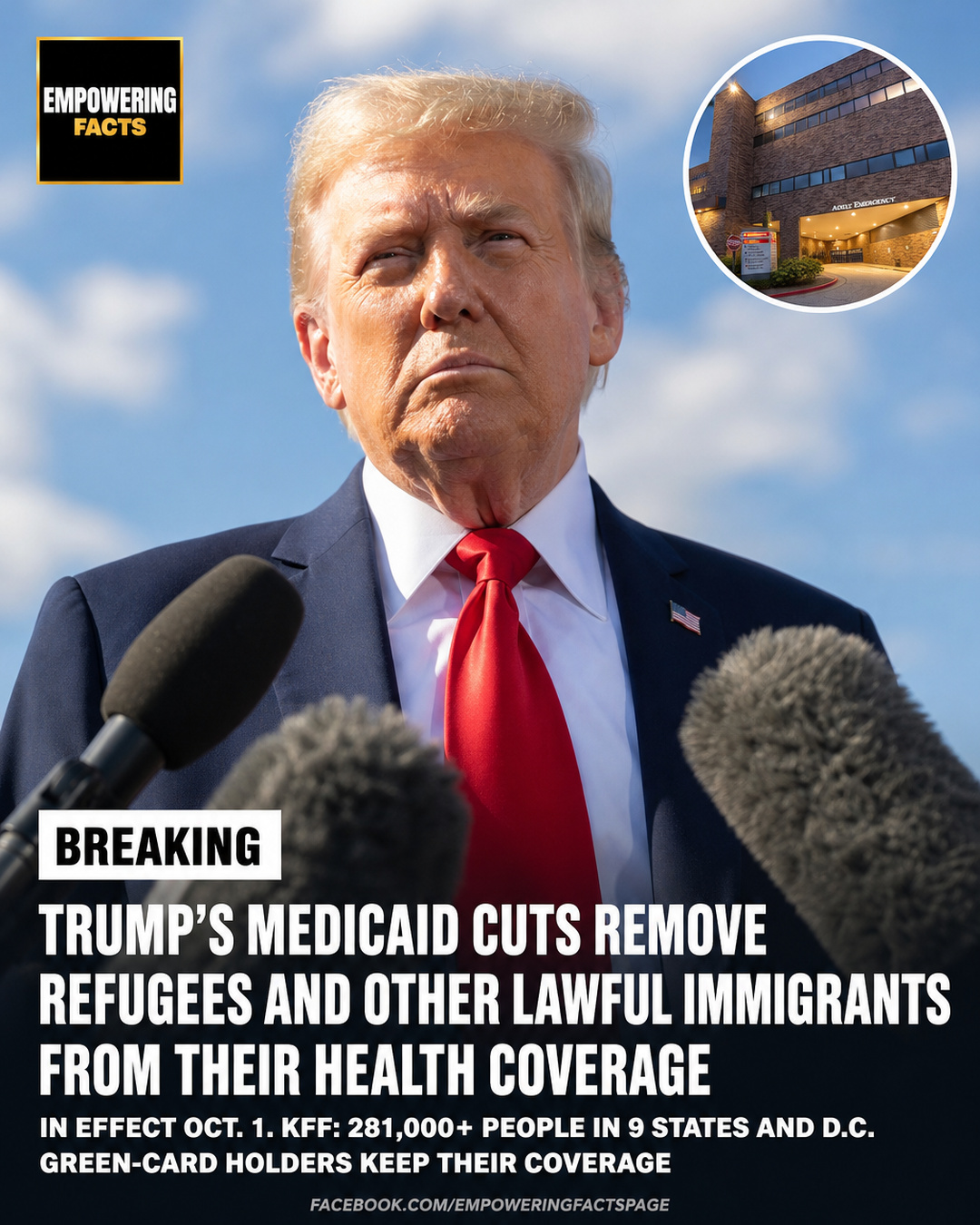
Refugees, asylum seekers and other lawfully present immigrants began losing Medicaid on October 1 under the tax and spending law President Trump signed in 2025, often called the One Big Beautiful Bill Act.
The change ends Medicaid and CHIP, the Children's Health Insurance Program, for several groups who are in the country legally but do not yet have a green card. That includes refugees, asylees and certain victims of human trafficking and domestic violence, including some with pending Violence Against Women Act green card applications. Green-card holders keep their coverage, as do certain Cuban and Haitian entrants and migrants from Pacific Island nations covered by the Compact of Free Association.
KFF estimates more than 281,000 immigrants in nine states and Washington, D.C. are affected. Arizona said 29,000 legal immigrants were removed from its Medicaid rolls on October 1. Florida's estimate is much higher, closer to 177,000. Together, the two states account for most of the people KFF counted.
The White House defends the change as a matter of fairness to taxpayers. Spokesperson Lauren Bis said immigrants "must be able to support themselves without taking from overburdened benefits programs." Steven Camarota of the Center for Immigration Studies supports screening legal immigrants for their income potential and education before they arrive. Supporters argue Medicaid was built for citizens and long-term residents, and that limiting it protects the program for them.
Advocates see it differently. Ben D'Avanzo of the National Immigration Law Center said the change tells immigrants they "are not welcome here." Carmen Feliciano of UnidosUS warned, "We are not going to have the capacity to serve all the people who need it." She said more people will end up in emergency rooms, which tends to raise costs for hospitals and for states. Hospital emergency rooms must still treat anyone in an emergency, regardless of coverage.
The October 1 change is one piece of a much larger set of Medicaid changes in the same law. KFF projects federal Medicaid spending will drop by $911 billion. The Congressional Budget Office estimates 7.5 million fewer people will have health insurance by 2034 because of the Medicaid provisions. Work requirements and more frequent eligibility checks for other enrollees are still to come.
People who lose full coverage may still qualify for Emergency Medicaid, which pays for urgent hospital care but not routine doctor visits or prescriptions. Starting in January, subsidized Marketplace and Medicare options will also be limited to the same three groups that keep Medicaid. Rules vary by state, and some states run their own programs, so anyone affected should check with their state Medicaid agency.
Immigrants who later get a green card can apply again, though many new green-card holders face a five-year waiting period before Medicaid eligibility returns.
The debate over the law is likely to follow both parties into the November 3 midterms.
Do you support ending Medicaid for refugees without green cards? YES OR NO?